on the street · the house lights are off · every lamp in here is somebody’s own
A shopfront on the street
The Collection Collection
A cabinet of our people’s collections. The house brings the furniture; the light is theirs.
In the picture: the gallery from the doorway, dark, with the cabinets standing apart on the bare floor. Ryan’s pens, paper and ink: a writing box open on a little table, with a daylight desk lamp on an arm, lit; Ryan’s perfume: a tall cupboard with its door ajar, with a strip light inside the door, switched off, because there is nothing in it yet; Norah and her husband’s leather swatches and stamping tools: a pegboard on the wall over a bench, with no lamp yet, because the lamp is Norah and her husband’s to choose; Chelsea’s house plants: a plant stand in three steps, with no lamp yet, because the lamp is Chelsea’s to choose; Helen’s books and rocks: a chest of shallow drawers with books along the top and one drawer pulled out, with no lamp yet, because the lamp is Helen’s to choose.
Some of us keep things. Pens, and the inks that go in them; perfume; the swatches and tools a trade is made of; plants on every sill; books, and rocks. This is a gallery of our people’s collections, one cabinet each, and every cabinet has a lamp of its own chosen for the thing it lights. There are no house lights. What you can see in here is exactly what somebody has decided to show you.
Why keep a collection
Nobody in here needs a reason, and nobody is asked for one. But the things we keep have a way of being more than things, and two of our glossary entries say why better than a label could. A special interest is a whole way of paying attention, and a collection is often what one looks like from across a room:
Some special interests are short lived, and some last the lifetime of the person; but, however long they last, they are intense, delightful, and a vital part of autistic culture.
C.L. Lynch, 7 Cool Aspects of Autistic Culture, NeuroClastic, 2019. Read against NeuroClastic's own page on 2026-09-23. Special Interest, in our glossary.
And object personification: the pen that would be lonely in the drawer, the rock that is glad to be back on the shelf. That is not a mistake about pens and rocks. It is care, and it is ordinary, and in here it is how everything on display is treated.
Many of us identify with the items we love, and even feel a degree of empathy for them, as if they were alive.
Devon Price, Unmasking Autism, Harmony Books, 2022. Read off our own Object Personification entry, which quotes the book at pages 169 and 170; not checked against a copy of the book from here. Object Personification, in our glossary.
The cabinets
One per collection, in the order they arrived. Each owner is named the way they asked to be, and anything that reached us through somebody else says so on its label. A cabinet with nothing in it yet stands with its lamp off, and its label is exactly as easy to read as the lit ones: an empty cabinet is not a lesser one, it is one that is waiting.
-
Ryan’s
Pens, paper and ink
“I have an extensive pen and ink collection.” — Ryan
Lit by a daylight desk lamp on an arm, from the upper left, because ink is the thing being collected, and a warm bulb tells lies about its colour.
Titles, descriptions and captions written by Claude from Ryan’s photographs, so that nobody had to write them before sending; the owner’s own words wherever they gave any, and anything wrong is changed the moment they say.
Given in Ryan’s own brief for this room, 2026-09-23.
-
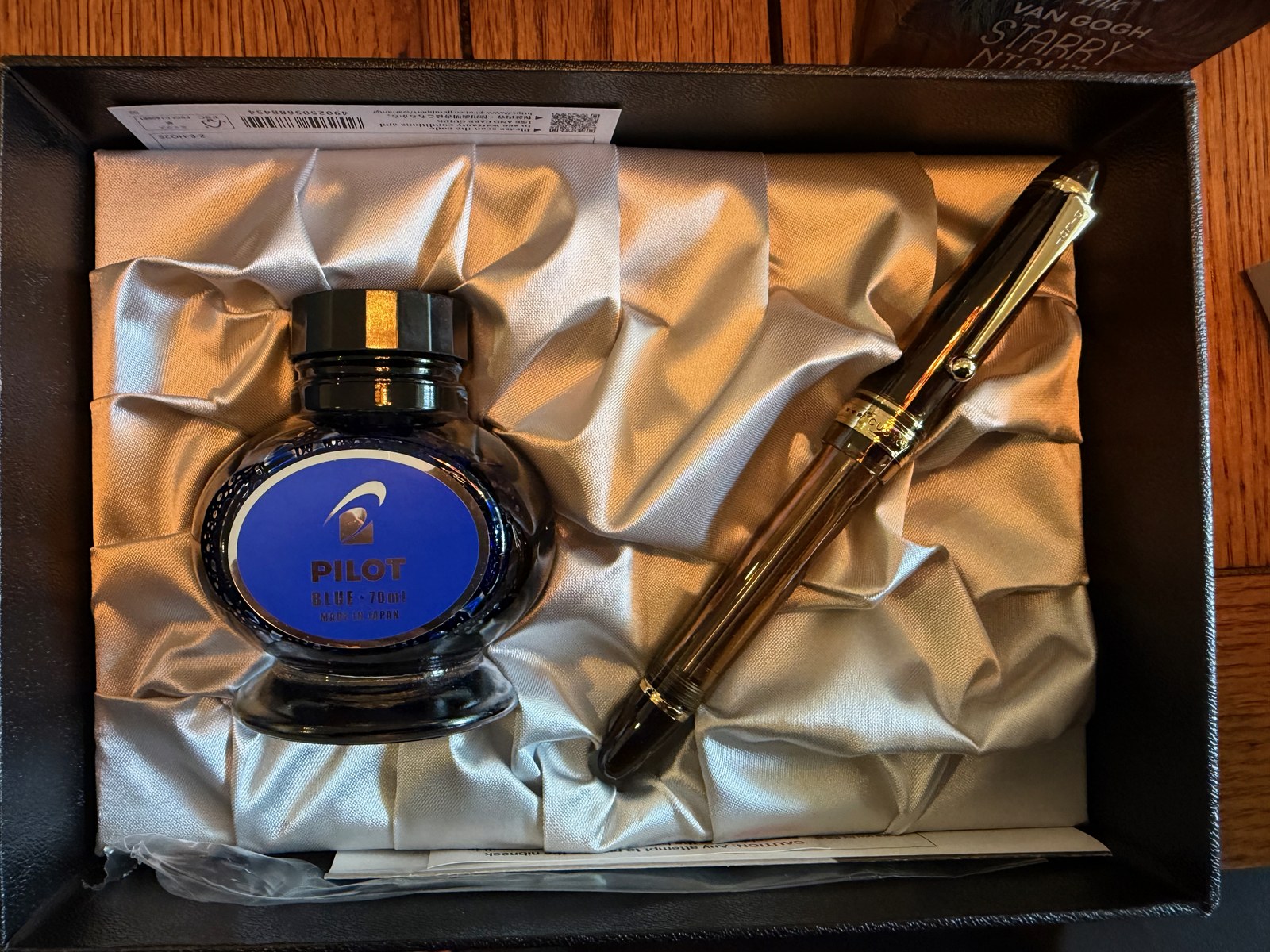
Blue ink and a dark pen, boxed Still in the box it came in, satin and all. -
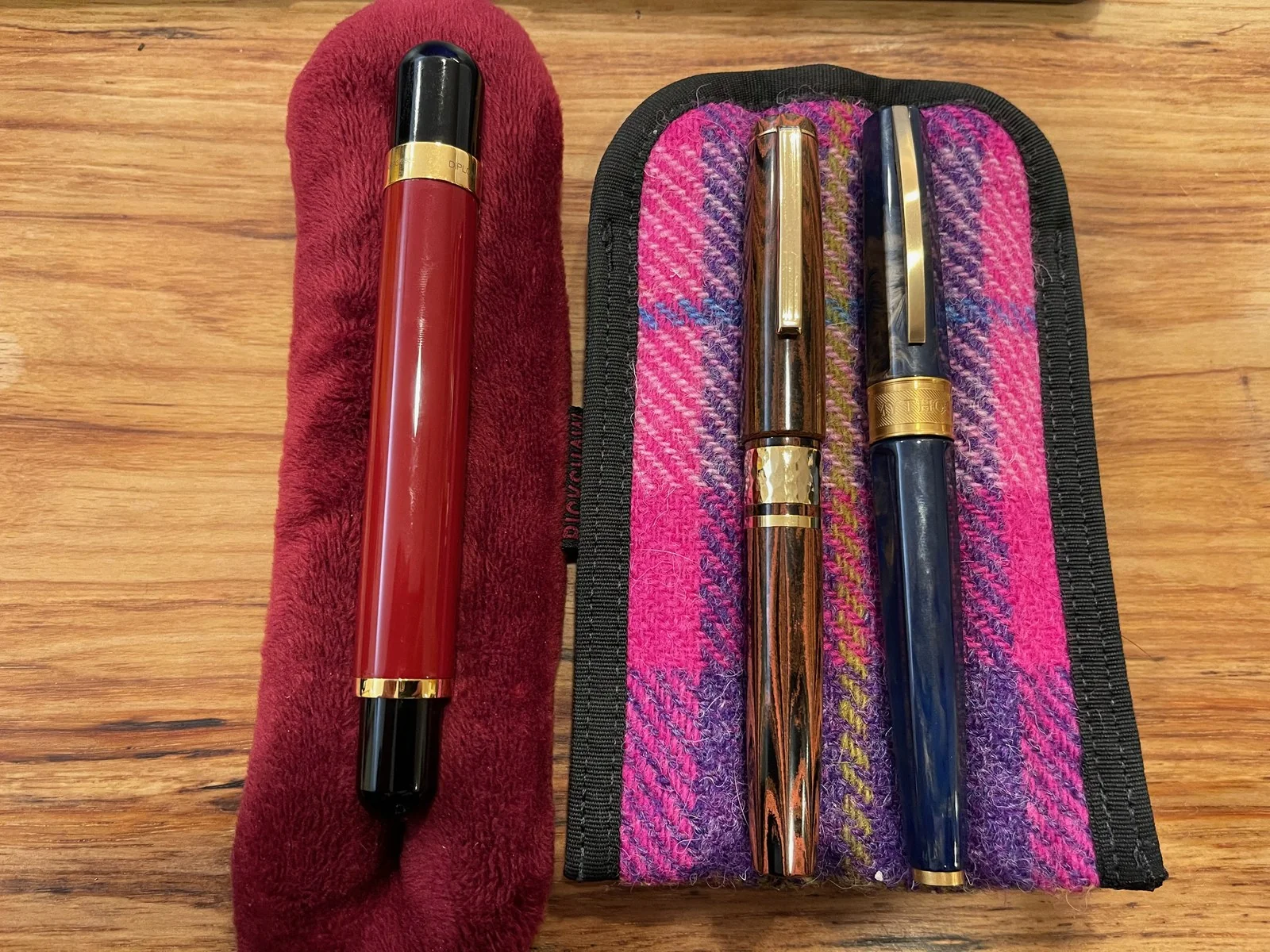
Two sleeves, one of them tweed Tweed for two, velvet for one. -
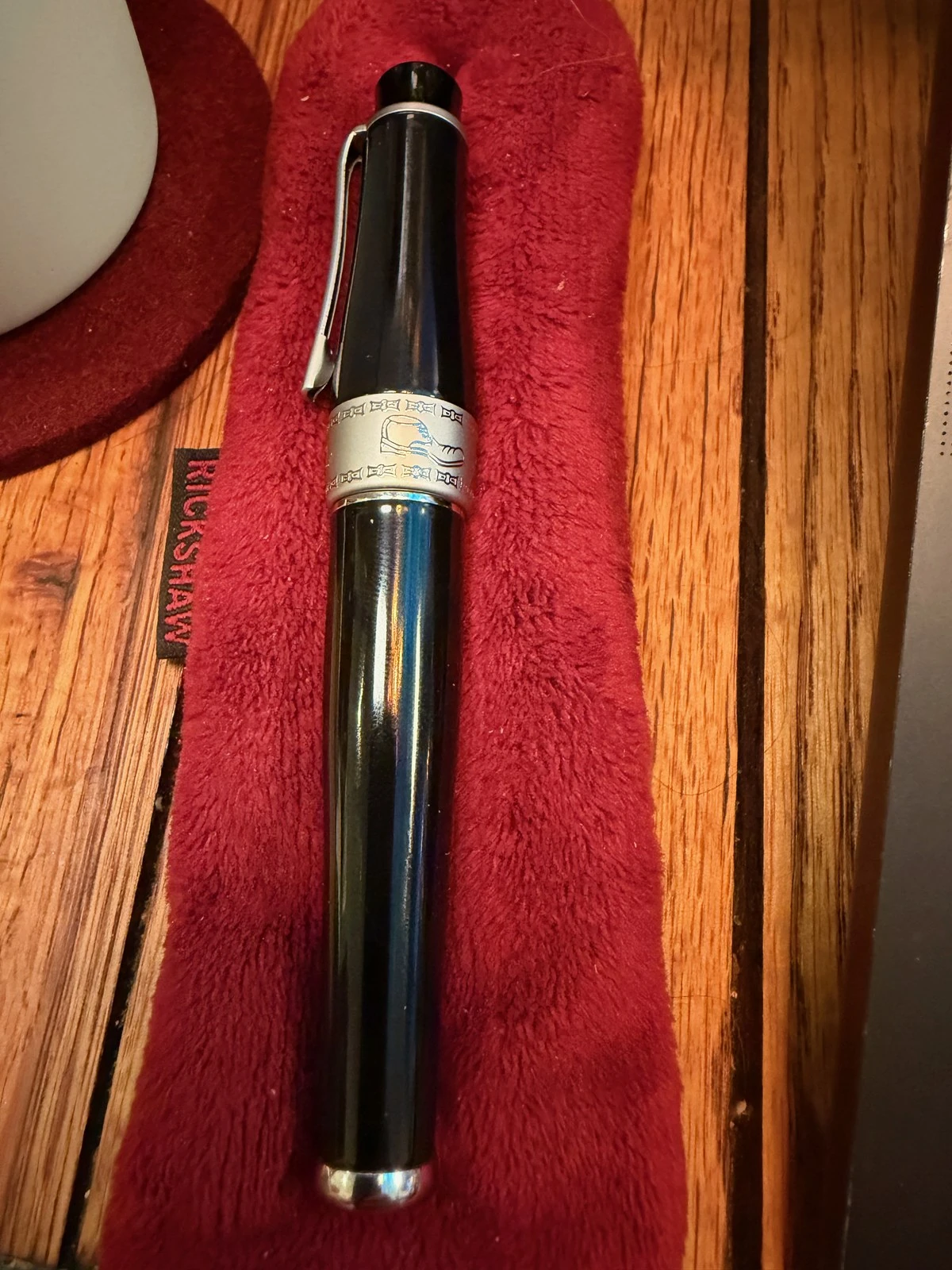
Black pen with an engraved band A silver band with a picture on it, and a mug just out of the way. -
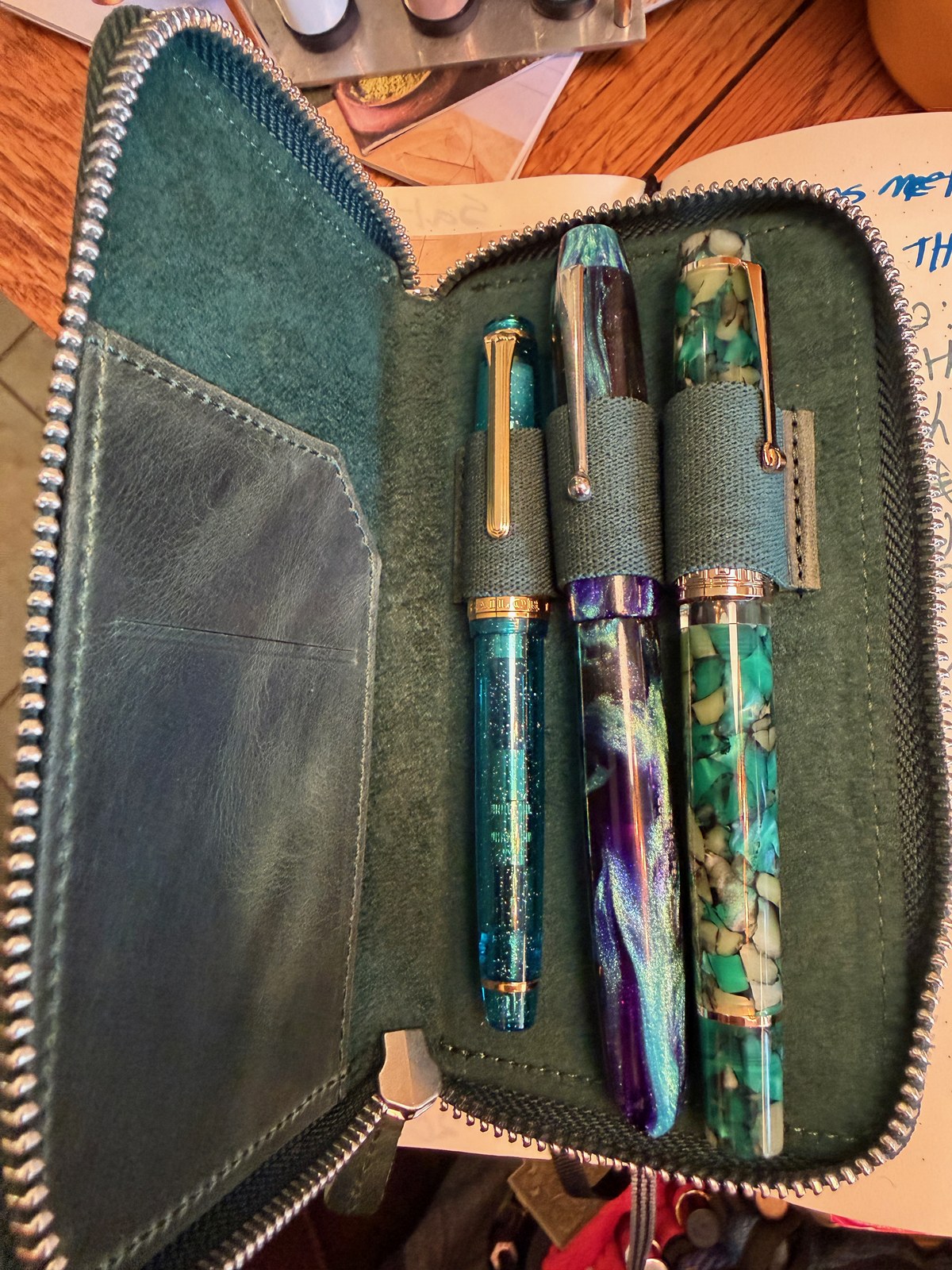
A green case of green pens Greens in a green case. -
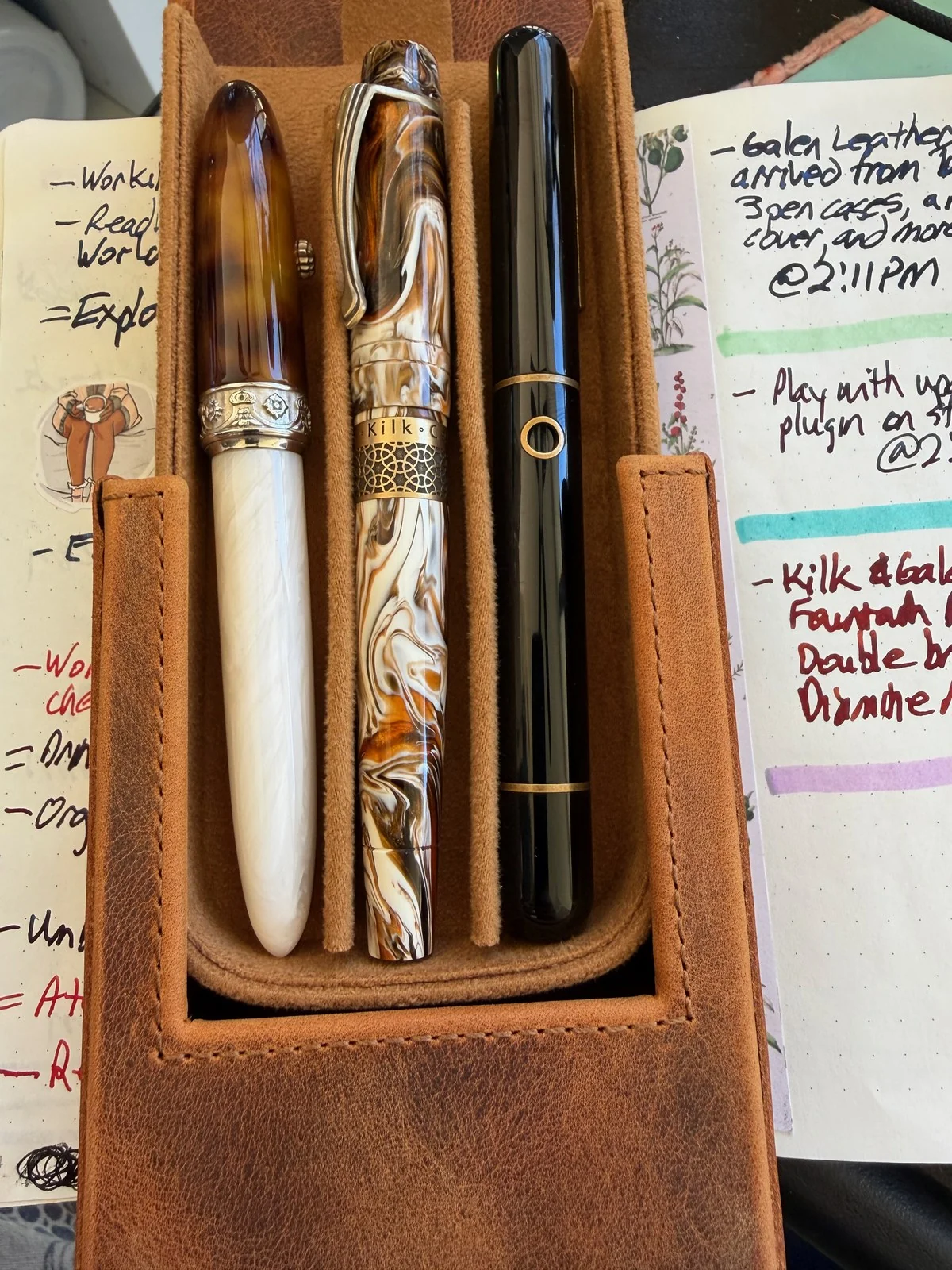
Tortoiseshell, marble and black A leather case, and the journal open underneath. -
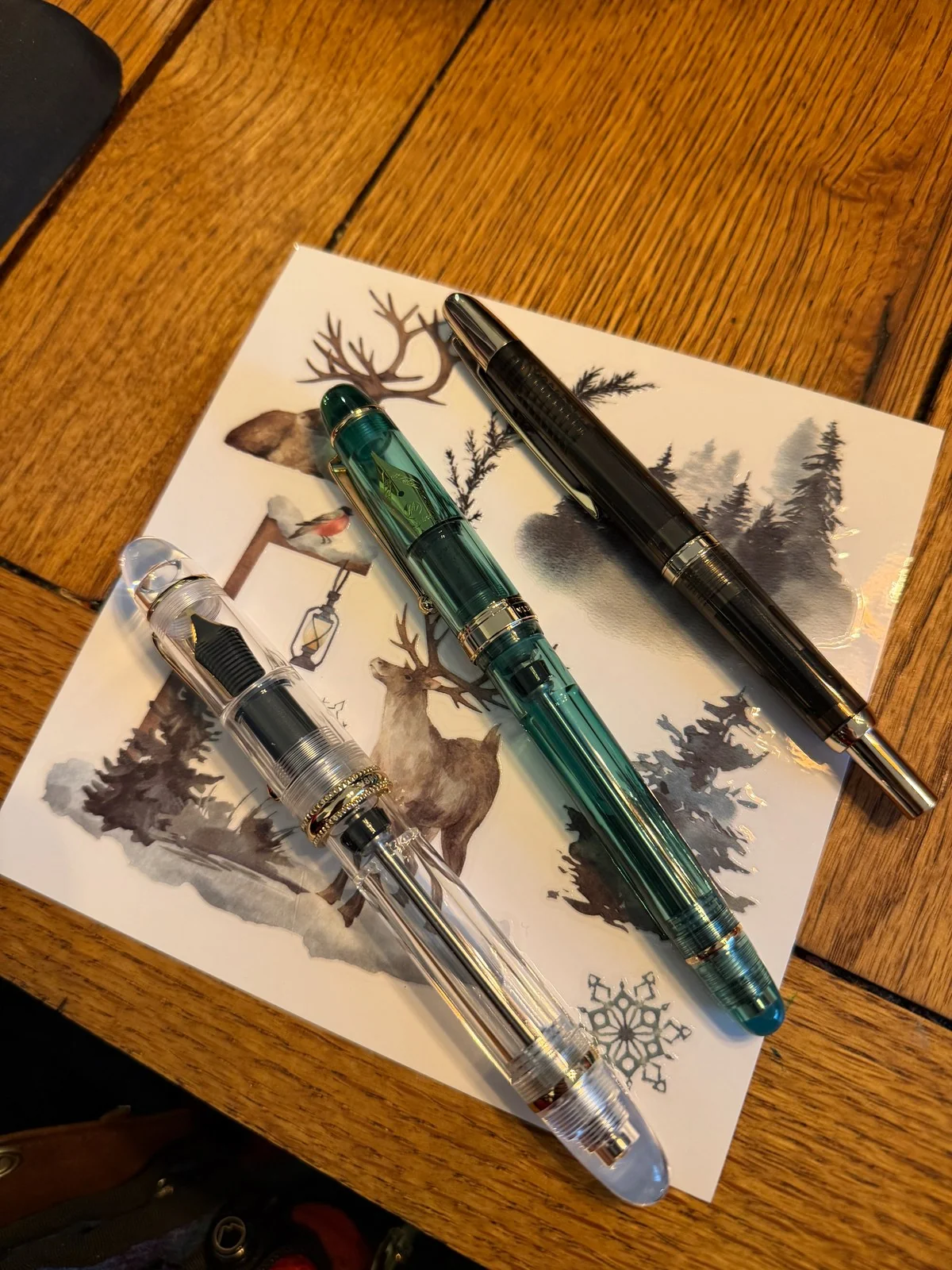
See-through pens on a winter card Nothing about them is hidden, least of all the ink. -
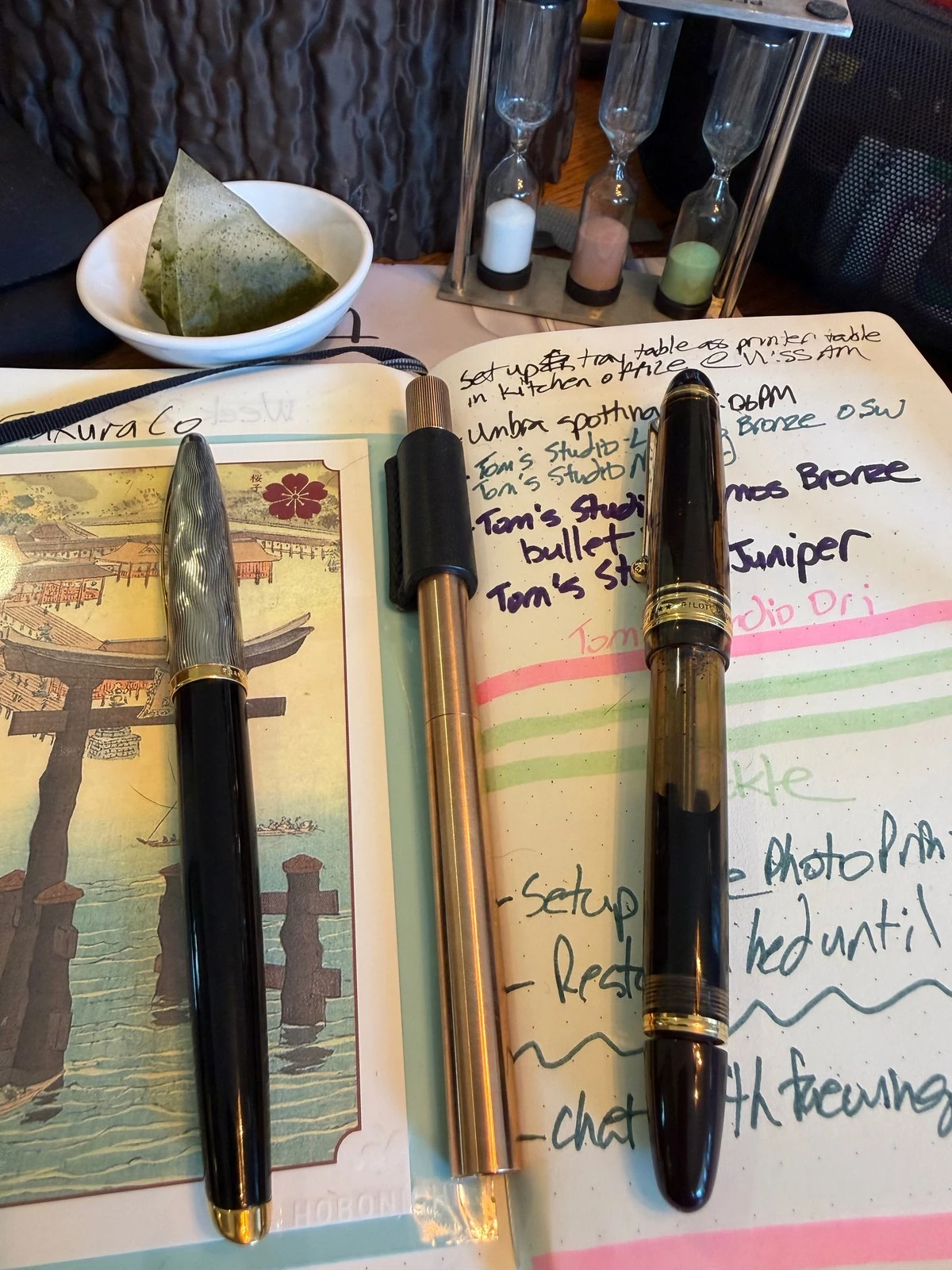
Pens across a journal spread Behind them, a tea bag in a dish and three sand timers. -
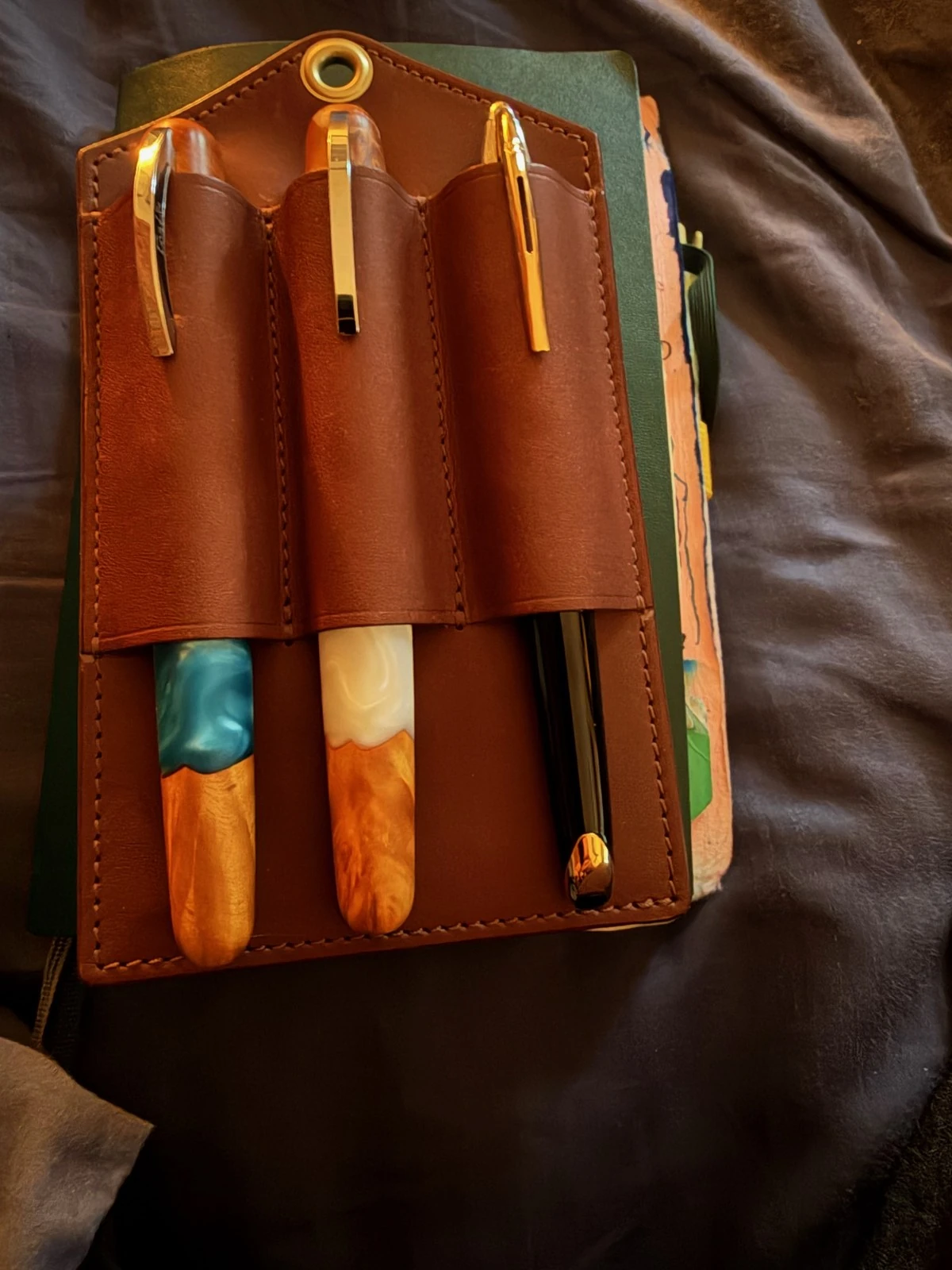
Resin pens in a leather holder Half sea, half sunset. -
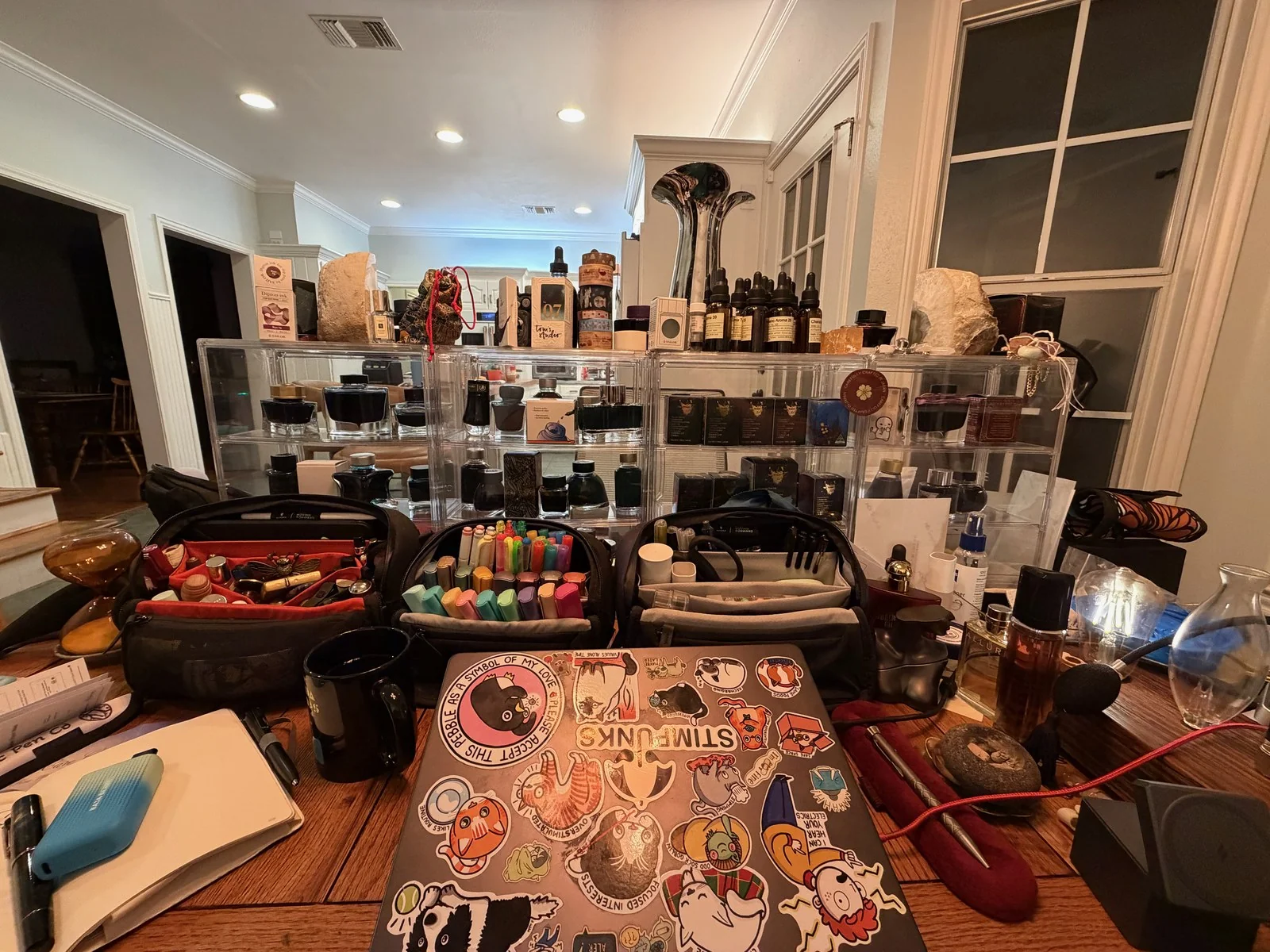
The whole table Where it all lives, more or less. -
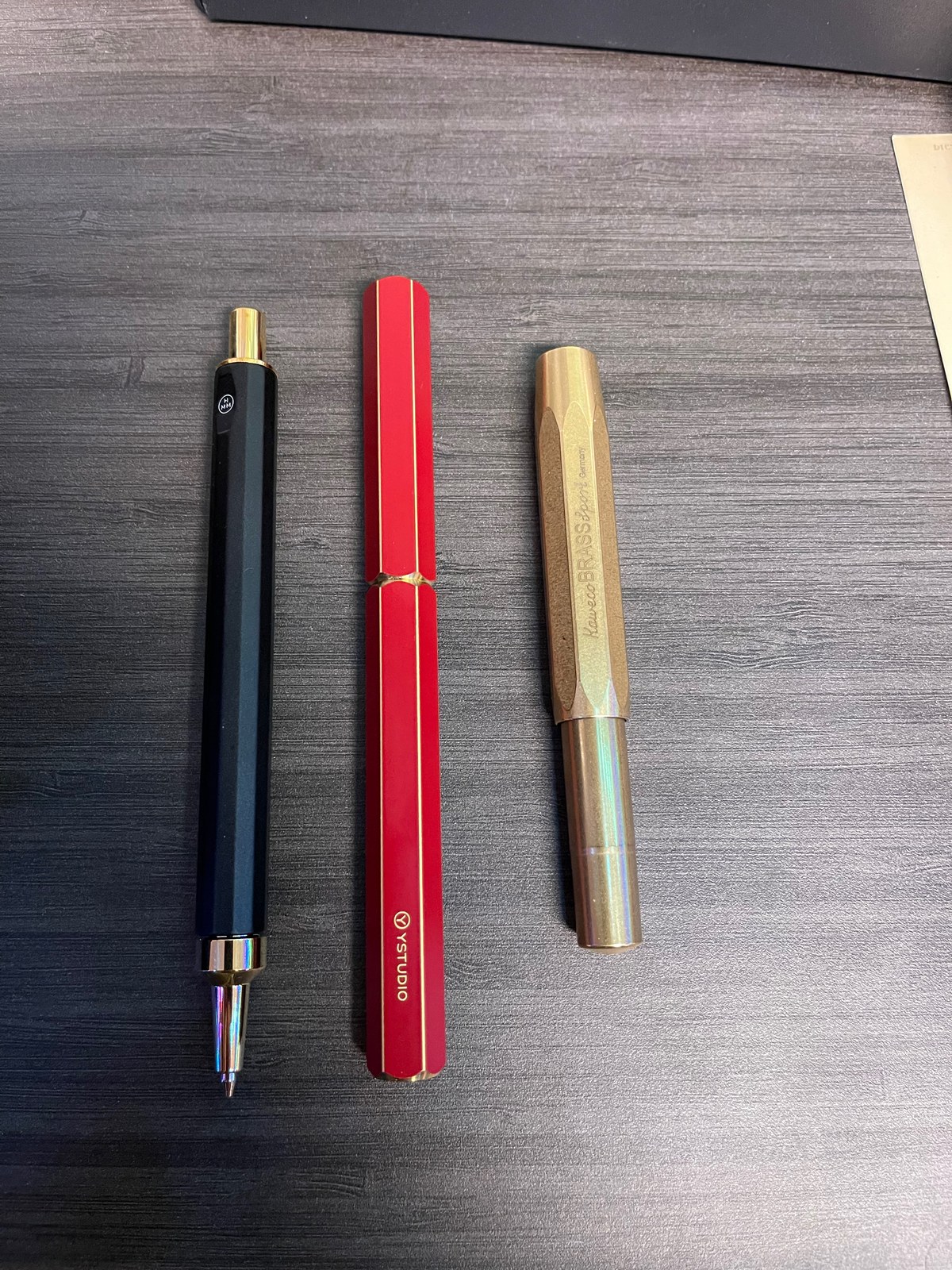
Black, red and brass Pens with corners. -
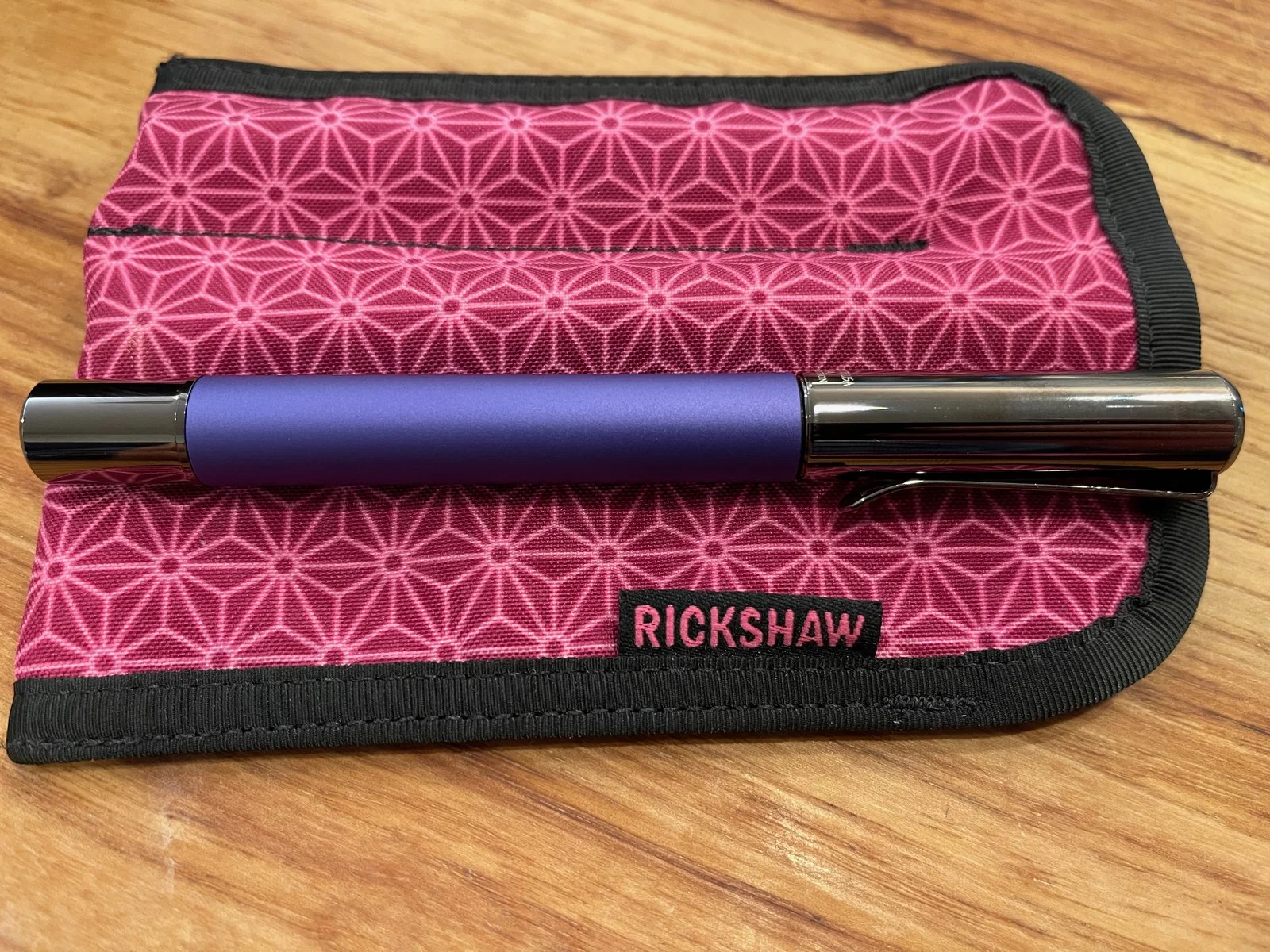
Purple pen on a pink sleeve Purple on pink on wood. -
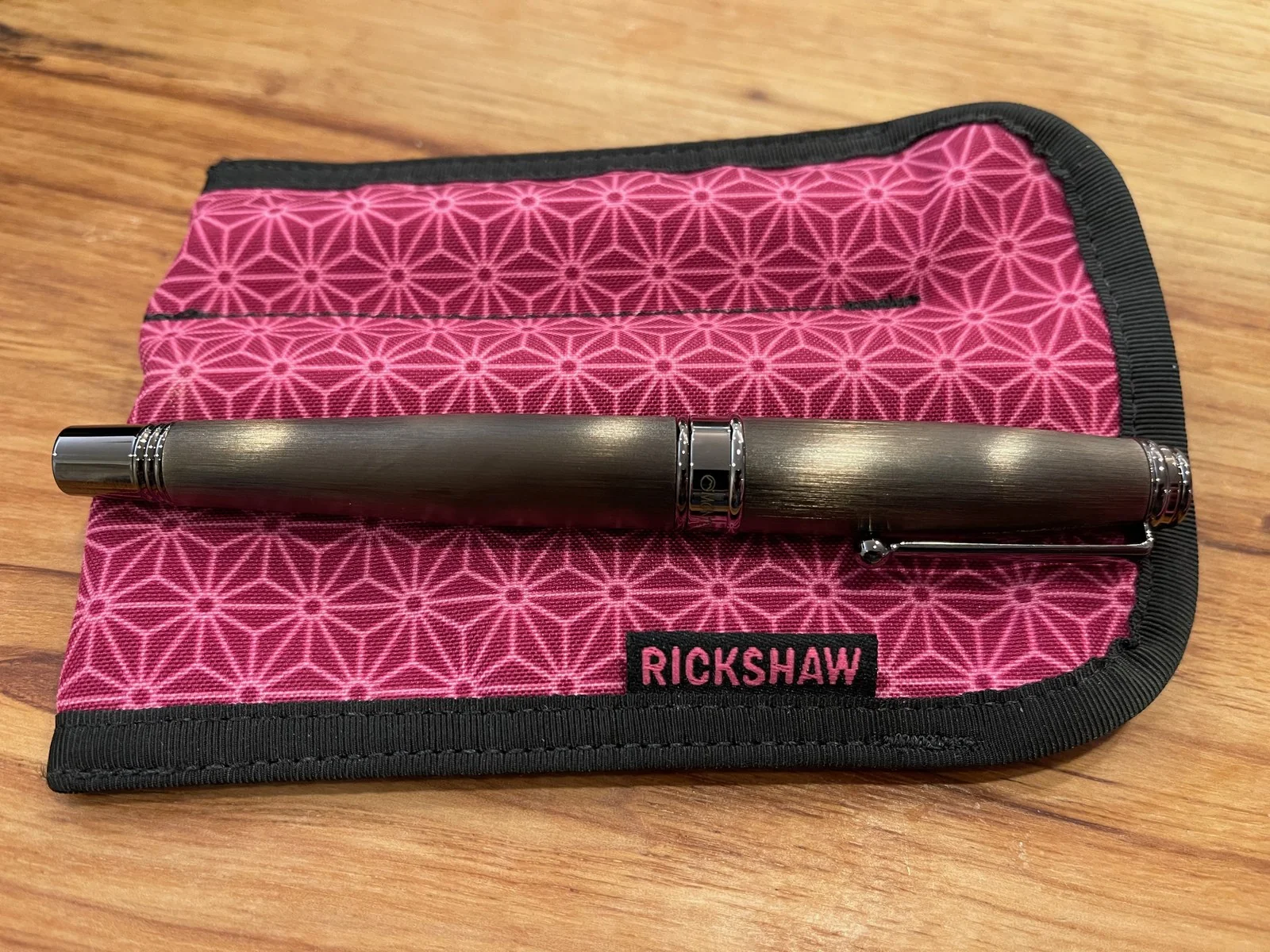
Gunmetal pen on a pink sleeve Same sleeve, different pen. -
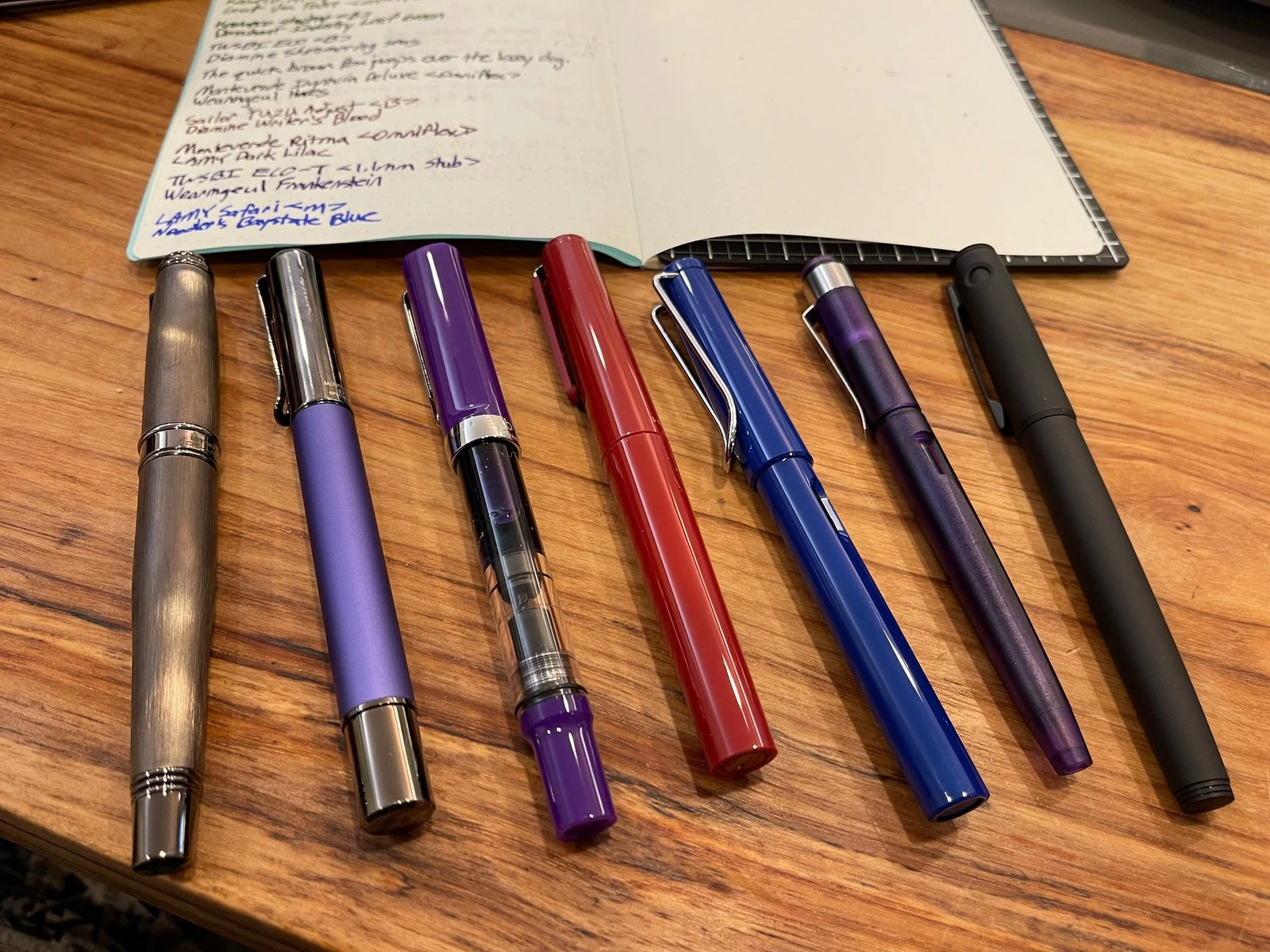
A row of pens under a list Lined up under the list. -
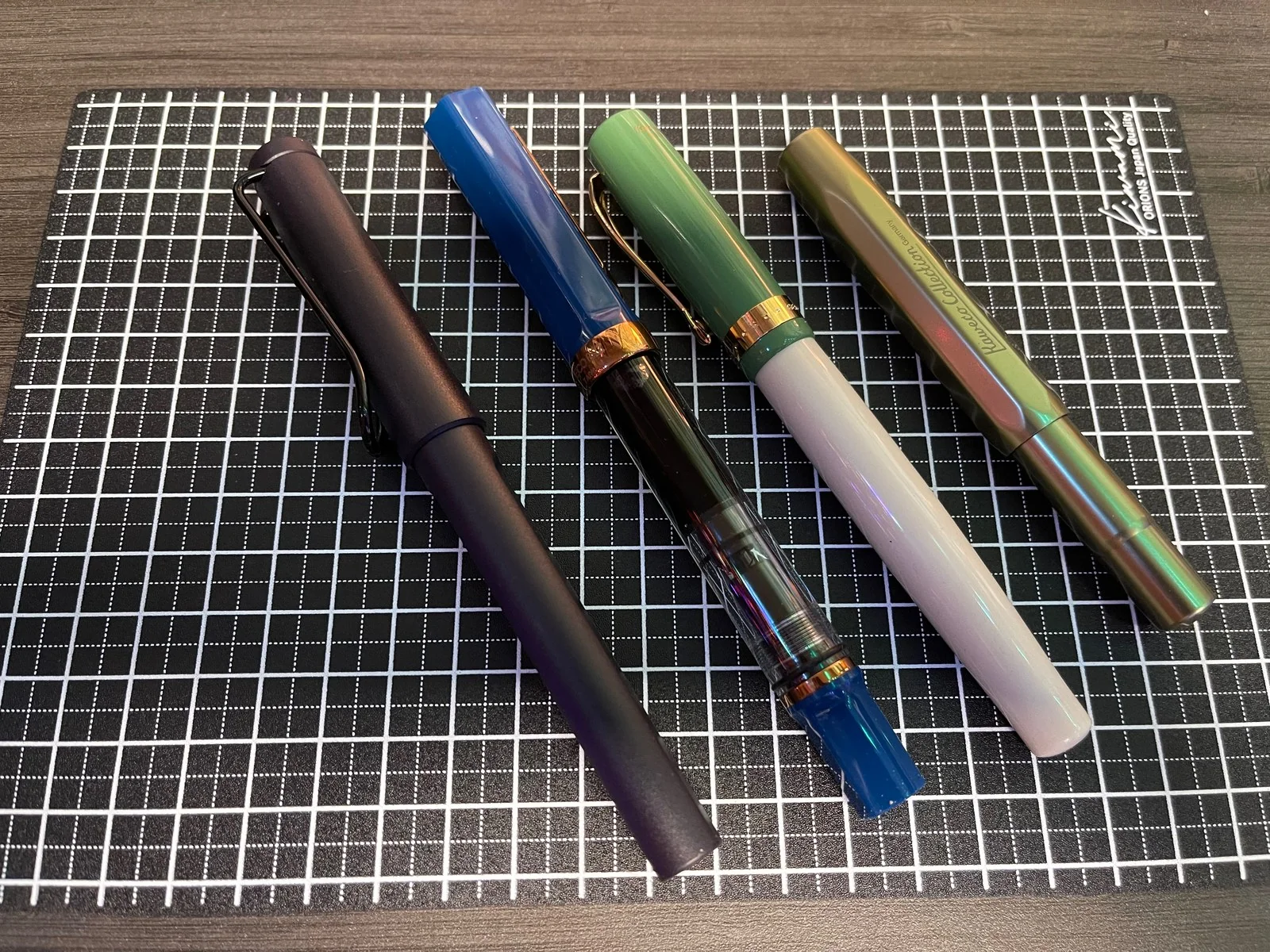
Pens on a cutting mat Ruled lines for pens that do not need them. -
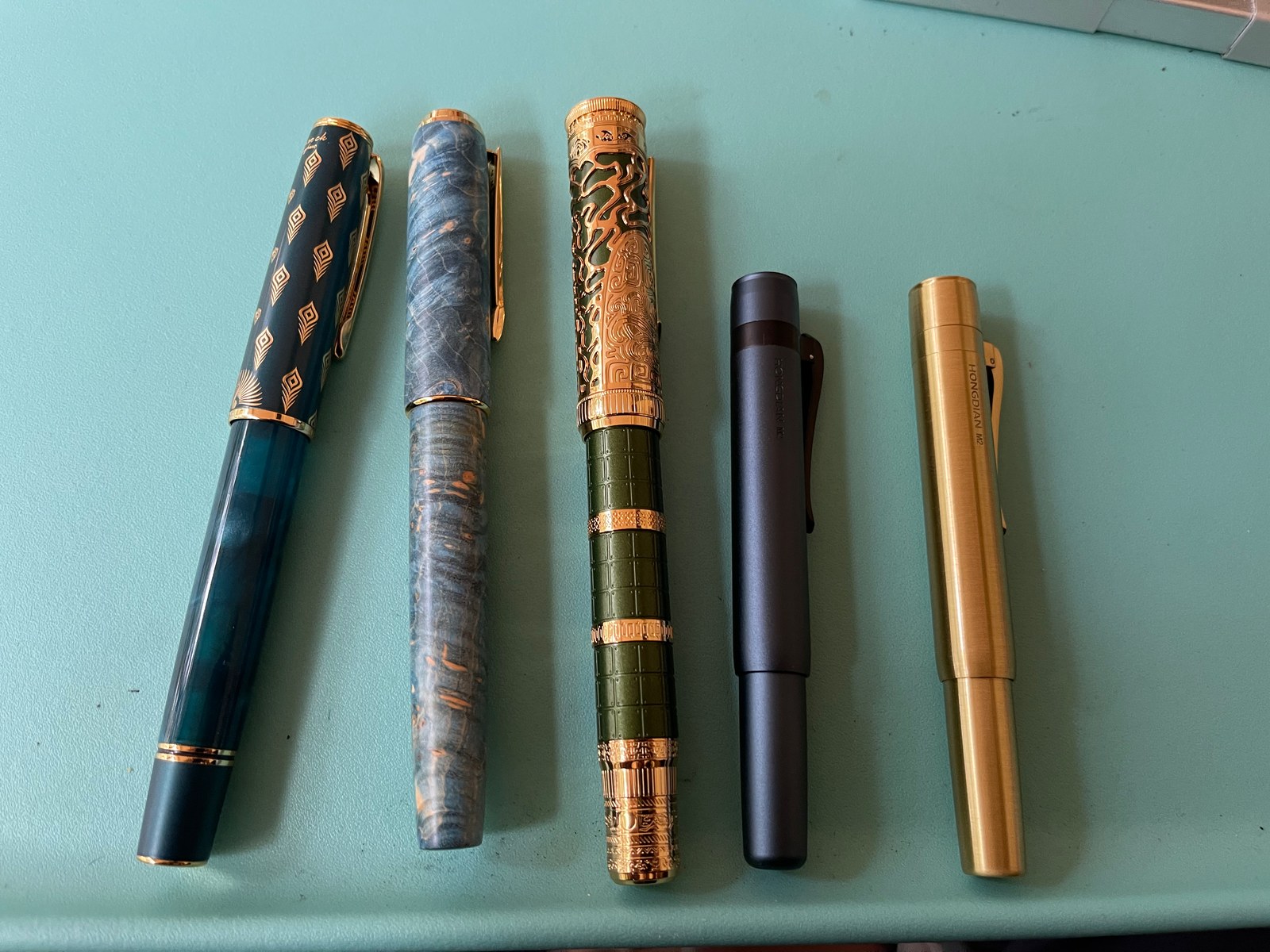
Peacock, burl and gold From very plain to very much not. -
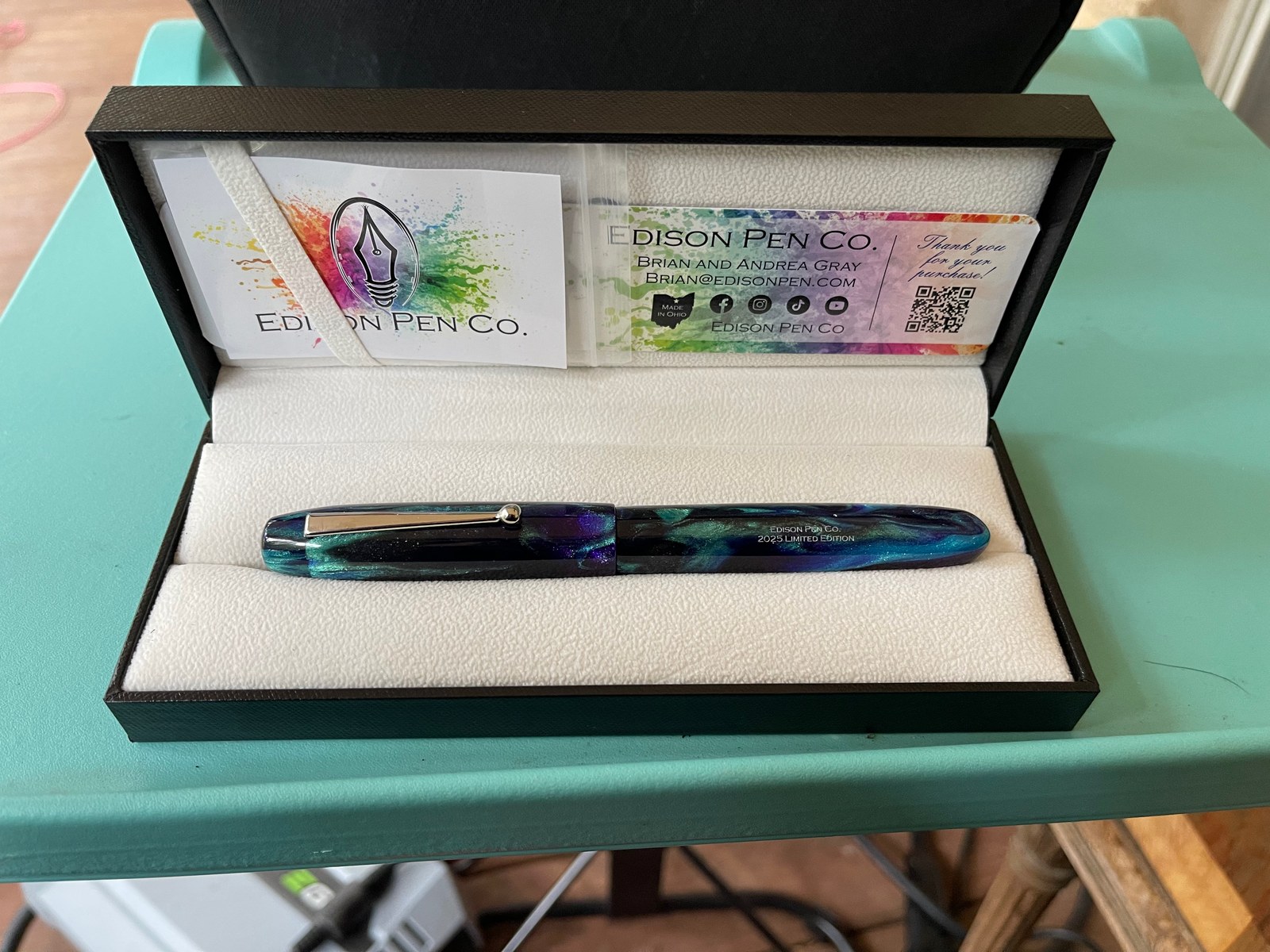
A swirl in a white-lined box Straight out of the box, card still tucked in the lid. -
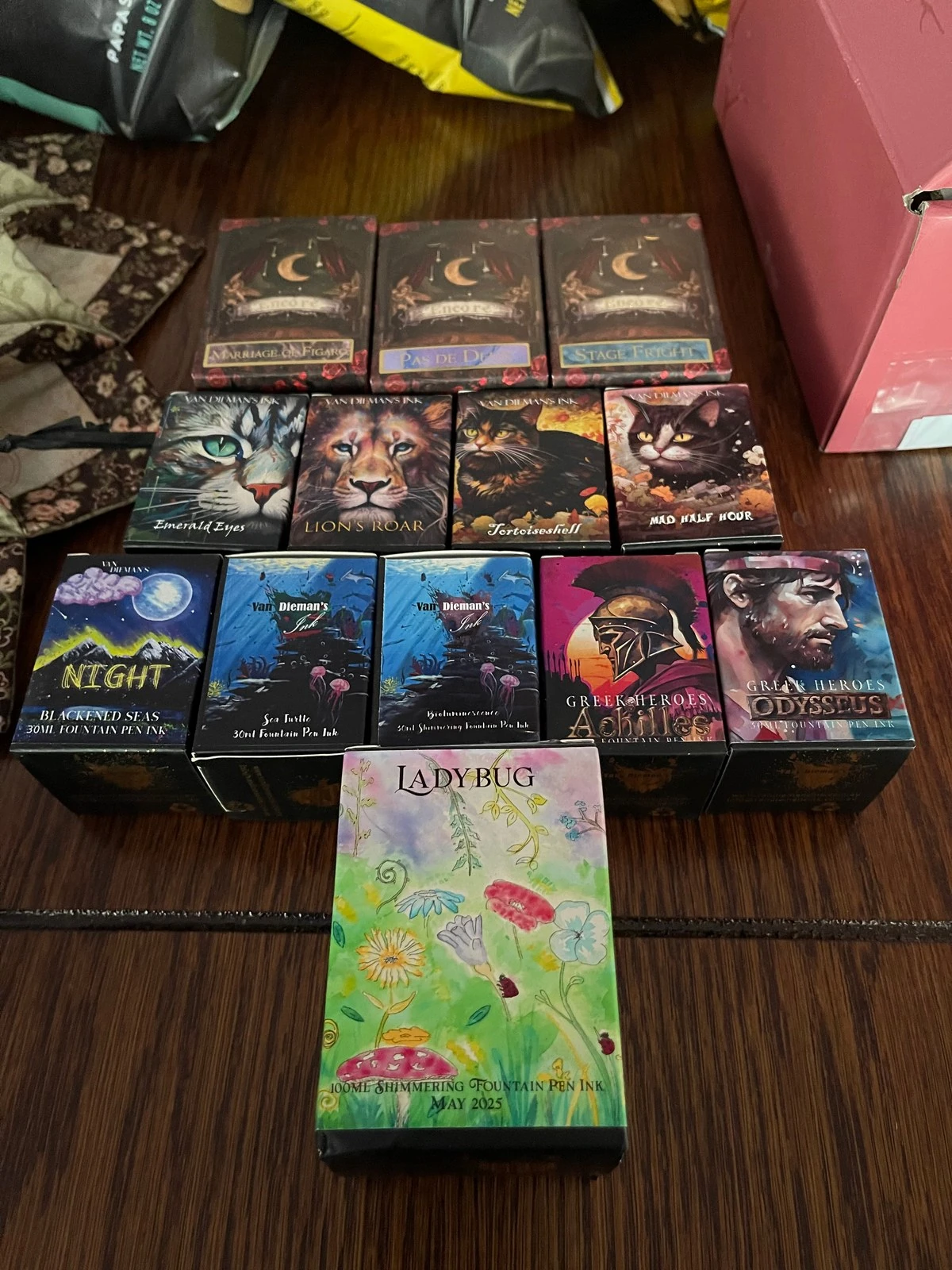
Ink boxes, laid out Every box its own painting. -
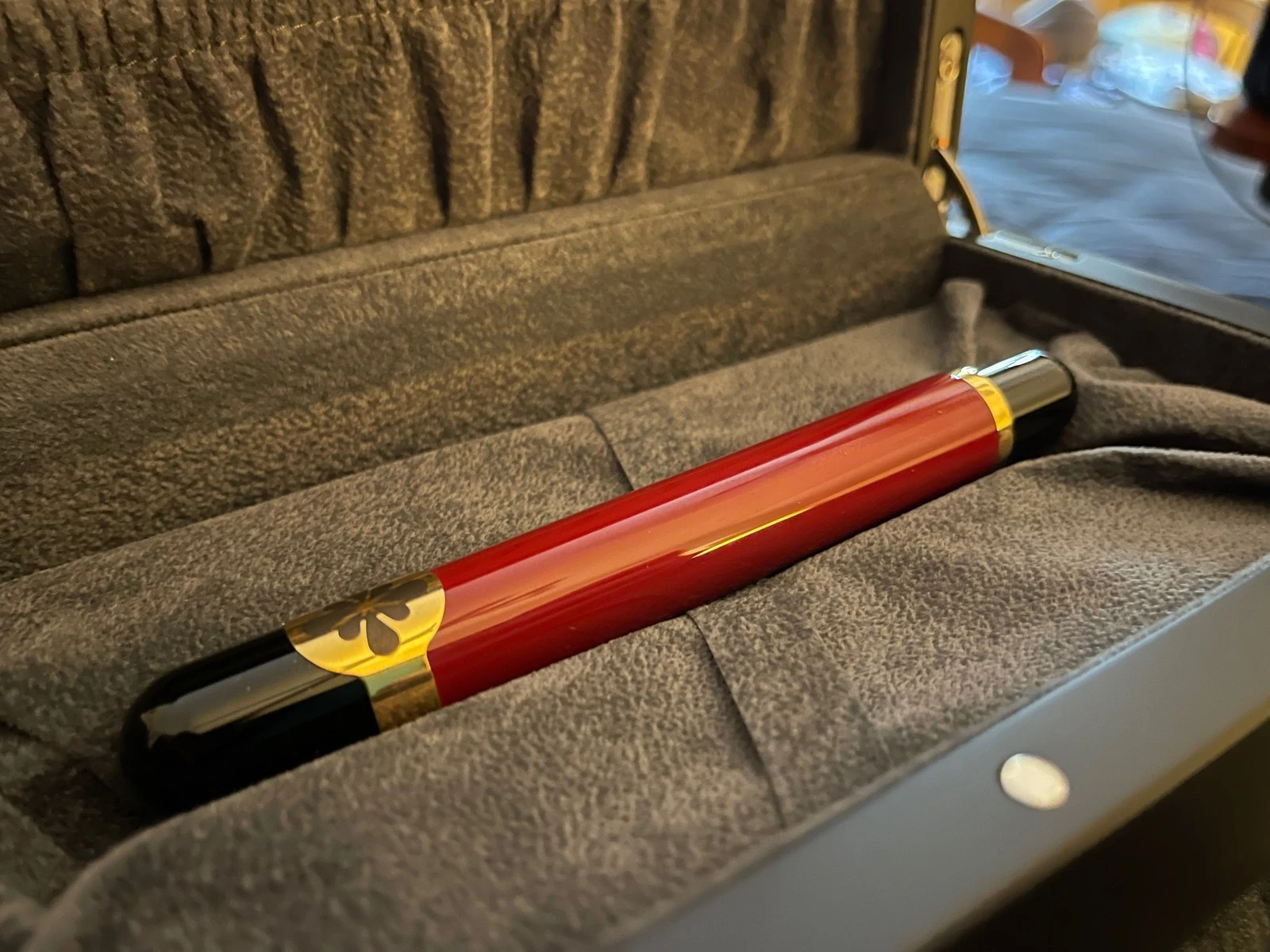
Red and black, in suede Lying in its box like it has nowhere to be. -
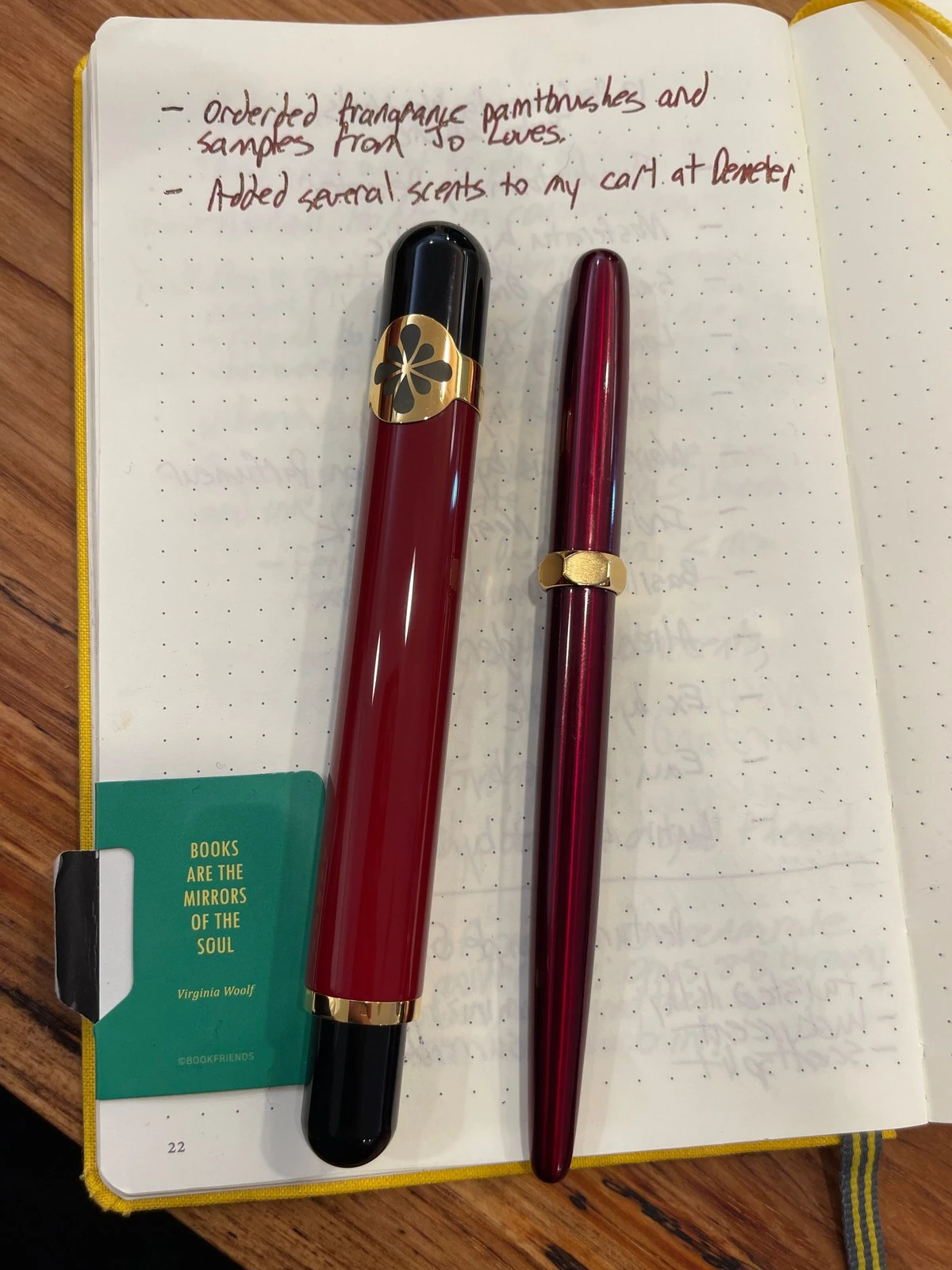
Two reds on a journal page The page above them is about perfume, which is the next cabinet along.
-
-
Ryan’s
Perfume
Lit by a strip light inside the door, which is on only while the door is open, because light spoils perfume, so the cupboard is kept shut and dark and lights itself only while somebody is looking. It is switched off until there is something in here to light.
Nothing in it yet. The lamp goes on with the first photograph.
Given in Ryan’s own brief for this room, 2026-09-23.
-
Norah and her husband’s
Leather swatches and stamping tools
No lamp yet. The lamp is Norah and her husband’s to choose, and it will be none of the ones already in here.
Nothing in it yet, and nothing goes in unless Norah and her husband send it. The furniture is the house’s guess, and theirs to change.
Given relayed by Ryan in the brief for this room, 2026-09-23: they make leather goods together.
-
Chelsea’s
House plants
No lamp yet. The lamp is Chelsea’s to choose, and it will be none of the ones already in here.
Nothing in it yet, and nothing goes in unless Chelsea sends it. The furniture is the house’s guess, and theirs to change.
Given relayed by Ryan in the brief for this room, 2026-09-23.
-
Helen’s
Books and rocks
No lamp yet. The lamp is Helen’s to choose, and it will be none of the ones already in here.
Nothing in it yet, and nothing goes in unless Helen sends it. The furniture is the house’s guess, and theirs to change.
Given relayed by Ryan in the brief for this room, 2026-09-23.
House rules
- Nobody asks how many. A collection is not a number, and nothing in here is counted: not the pens, not the plants, not the cabinets.
- Nothing is priced, valued or called rare. What a thing might fetch is none of our business, and a page that listed what people own with a price beside each thing would be a list for somebody else to shop from.
- Nothing is ranked. No best cabinet, no biggest collection, and nobody’s pens set against anybody else’s.
- Every cabinet has its own lamp, and no two lamps in here are alike. The owner chooses it. The house only ever guesses at the furniture.
- A collection can be anything somebody keeps on purpose. It can stop for years, sit in a drawer, and start again, and nobody asks why.
- Nobody explains their collection to anybody. “What is it for?” is not asked in here.
- The pictures are of things, never of people. A photograph with a person in it belongs on the polaroid wall, which has its own promises and its own consent record.
- Nothing in a picture says where you live. The location a phone writes into every photograph is stripped before a file comes anywhere near this site, and every frame is looked at for an address, a letter or a view out of a window before it goes up.
- Nothing is filtered or cropped. A photograph is made smaller so the page loads, and that is all that is done to it. The lamp’s colour goes round the picture and never over it.
- Everything comes down when you say so, one thing or the whole cabinet. It comes out of the repository too, and nobody asks whether you are sure.
Putting something in a cabinet
Send the photographs, and that is the whole job. Phone pictures are fine, badly lit is fine, the desk behind them is fine. You do not have to title anything, describe anything or caption anything: the house does the describing, and says it did.
That is the opposite of the polaroid wall, on purpose. The wall asks you to write the words for a picture of yourself, because a description of a person is theirs to write and nobody else’s. A description of a pen is not a description of anybody. It is work, and work is exactly the thing that stops people sending a picture at all, so in here the house takes it.
The describing is done by Claude, an AI, looking at each photograph, and every cabinet says so on its label. It writes only what it can see: colour, shape, what a thing is made of, what it is standing beside. It does not name a maker or a model from what a thing looks like, because a guess on a label reads as a fact. If a name is printed on the thing and can be read in the picture, it can go on the label; otherwise the name is yours to give, and yours wins over anything the house wrote.
Reach us through the Stimpunks contact page or in our community, say whose collection it is and how you want to be named, and it goes in a cabinet. To take anything down, the same routes, and the word remove is enough.
Whose these are
Every collection belongs to the person whose name is on its cabinet, and so does every photograph of it. The photographs are not under this site’s Creative Commons licence and carry no licence onward at all, so that taking one down stays possible: a Creative Commons licence cannot be revoked, and “it comes down when you say so” would otherwise be a promise the licence contradicted.
Every quotation belongs to whoever wrote it: C.L. Lynch at NeuroClastic, and Devon Price, whose book we have read only as far as our own glossary quotes it, and say so beside the line.
Every quotation in this room is 30 words or fewer, names who said it, where and when, and says beside it how it was checked. tools/make-collection.py refuses a longer one; refuses a photograph that still carries any metadata, that nobody has described, or that nobody has looked at for a person or an address; refuses a maker’s name in words Claude wrote unless it can be read in the picture; refuses a filter on any photograph; and refuses two cabinets with the same lamp.
Further, and better than a label: Special Interest · Object Personification · Monotropism · Infodump
The type is Gloock, by Duarte Pinto, for the room’s name and every label’s heading — a sharp, high-contrast serif of the kind a museum cuts its labels in — and Hanken Grotesk, by Alfredo Marco Pradil and Hanken Design Co., for everything you read. Both are on the Foundry’s shelves.
Job marker — a luggage tag that has come off its string
You have found a job marker. The Adventurer’s Guild is a shopfront on the street, and it posts jobs that send you round these rooms. Take the code below to its board and that job is done. Nothing here is scored, nothing expires, and one is a perfectly good number of jobs to do.
The job: The question nobody asks
Before the code: The Collection Collection’s house rules say nobody in there will ask you one question about your collection. What is it? Two words.
Hint 1
It is the first of the house rules.
Hint 2
It is the question everybody asks the moment they see a shelf of anything.
Last hint
Two words, and the answer to it would be a number.
Give me the answer
The answer is How many. A collection is not a number, and nothing in that gallery is counted — not the things, not the cabinets. A cabinet with a number beside it has become an inventory.
Taking the answer is a real way through this, not a lesser one. Nothing is watching and nothing is written down.
Quest code: LUGGAGETAG
That is the one.
A collection is not a number, and nothing in that gallery is counted — not the things, not the cabinets. A cabinet with a number beside it has become an inventory.
Quest code: LUGGAGETAG